
One of the most beautiful things about being Catholic is seeing how the Old Covenant is not discarded, but fulfilled in the New Covenant, in Christ. I love how the Old Testament is full of shadows, symbols, and prophecies that find their completion in the New Covenant. Yom Kippur, “the Day of Atonement”-is one of the most striking examples.
Below is a simple explanation of the Jewish meaning of Yom Kippur and how Catholics understand its fulfillment in Jesus Christ.
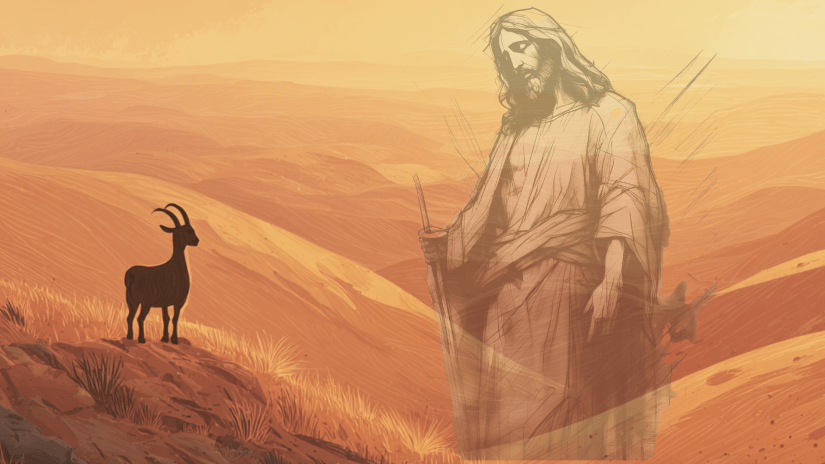
The Meaning of Yom Kippur (Jewish Understanding)
Yom Kippur is the holiest day in the Jewish calendar. It falls shortly after Rosh Hashanah and is dedicated entirely to repentance, reconciliation, and atonement. Traditionally, it includes:
- A 25-hour total fast (no food or water)
- Abstaining from work
- Public confession of sin
- All-day prayer and synagogue services
- Seeking forgiveness from both God and others
In ancient Israel, Yom Kippur was the one day when the High Priest would enter the Holy of Holies to make atonement on behalf of the people (Leviticus 16).
Two goats were offered:
- One was sacrificed, its blood sprinkled inside the sanctuary.
- The other… the “scapegoat” … had the sins of the people symbolically laid on it and was sent into the wilderness to die.
A bull was also sacrificed for the priest’s own sins. The ritual restored the people to covenantal purity before God.
How Catholics See Yom Kippur Fulfilled in Christ
The Church doesn’t abolish the meaning of Yom Kippur, but recognizes that its deepest purpose was completed by Jesus.
Christ is the True High Priest
“We have a great high priest, Jesus the Son of God… He entered once for all into the Holy Place.”
— Hebrews 4:14, 9:12
Just as the High Priest entered the Holy of Holies once a year, Jesus entered the true heavenly sanctuary – not with animal blood, but His own.
Christ is the Sacrifice
“He has appeared once for all at the end of the ages to put away sin by the sacrifice of himself.”
— Hebrews 9:26
The goats and bulls were temporary symbols. Christ is the eternal offering, “He who takes away the sins of the world.”
Christ as the Lamb of God , the New “Scapegoat”
“The Lord has laid on Him the iniquity of us all.”
— Isaiah 53:6
Jesus is the one who carries our sins away…outside the city, onto the Cross, and into the tomb, as the Lamb of God.
The Day of Atonement Becomes Good Friday
Yom Kippur was a yearly event. Christ’s sacrifice is “once for all.” Catholics live the fulfillment of that atonement in:
- The Mass – the one sacrifice made present
- Confession – the personal application of Christ’s atonement
- Good Friday – the true Day of Atonement for the world
As St. Augustine famously said:
“The New Testament lies hidden in the Old, and the Old is unveiled in the New.”
And St. Thomas Aquinas reminds us:
“All things in the Old Law were figures of Christ.”
This is why the Catholic Church doesn’t reenact Yom Kippur as a ritual – its meaning has already reached its fulfillment in the Passion of Christ.
Side-by-Side: Yom Kippur and Its Fulfillment in Christ
| Old Covenant (Yom Kippur) | New Covenant (Christ) |
|---|---|
| High Priest enters the Holy of Holies once a year | Christ enters the heavenly sanctuary once for all (Hebrews 9:12) |
| Goat sacrificed for sins of the people | Christ becomes the perfect sacrificial Lamb (John 1:29) |
| Scapegoat carries sins into the wilderness | Christ bears our sins and is crucified outside the city (Isaiah 53:6, Hebrews 13:12) |
| Animal blood sprinkled on the mercy seat | Christ offers His own blood (Hebrews 9:14) |
| Yearly ritual of atonement | One eternal sacrifice (Hebrews 10:10) |
| Confession and fasting | Confession and penance in the Sacrament of Reconciliation |
| Temple sanctuary | Heavenly sanctuary and the Church as His Body |
| Covenant renewed temporarily | Covenant fulfilled eternally |
What This Means for Catholics
We don’t look at Yom Kippur as something foreign to our faith; it’s part of our roots in salvation history. It prepares the world for Christ.
- Good Friday becomes the true Day of Atonement.
- The Mass is the living memorial of the one sacrifice.
- Confession is our personal participation in the atonement He won.
- Fasting and penance continue the spirit of repentance the day was meant to inspire.
As Pope Benedict XVI put it:
“Jesus does not abolish the Old Testament; He brings it to fulfillment by giving it its definitive interpretation.”
And the Catechism confirms it:
“The sacrifice of Christ and the sacrifice of the Eucharist are one single sacrifice.”
— CCC 1367

Conclusion
Yom Kippur shows us the yearning of Israel for a true and lasting atonement. In the New Covenant, that longing is not rejected – it’s completed.
I love seeing how the Old Testament foreshadows Christ, and how the New Covenant fulfills what the Old began. The shadows have become substance. What was done once a year in symbol is done once for all in truth.
Christ is our High Priest, our Sacrifice, the Lamb of God who takes away the sins of the world.
And He didn’t just enter the sanctuary of stone – He opened Heaven.
In the Gospel of John (1:29), John the Baptist exclaims, “Behold, the Lamb of God, who takes away the sin of the world,” referring to Jesus Christ. This phrase identifies Jesus as the perfect, sacrificial Lamb, an echo of the temple sacrifices, signifying that his death on the cross provides atonement for humanity’s sins and offers salvation.

 gracearmstrong.art