“Those who deny that the Son is God, deny the Father also.”St. Athanasius, the “hammer” of the Arians
Christ Pantocrator, Monastery of St. Catherine, Sinai (6th century)
If Jesus Christ were a creature—made, and not begotten—then He would not be God.
And if He is not God, there is no salvation. Because no creature can save another creature.
Only God saves.
This is the entire point of the Nicene Creed:
“God from God, Light from Light, True God from True God, begotten not made, consubstantial with the Father.”
Why did the Church fight so fiercely against Arianism?
Because Arianism destroys Christianity at its root. It turns Christ into a kind of “super-angel,” which means the Incarnation was not God Himself taking on our nature; just some spiritual middle-manager pretending to be God. That is blasphemy.
What is the Heresy of Arianism?
Arius – 4th Century Priest and Heretic:
“The Son is not eternal or co-eternal or co-unbegotten with the Father. He did not exist before He was begotten. The Son has a beginning, but God is without beginning.”
Arianism is the ancient heresy that claimed Christ was not truly God, but a created being—exalted, powerful, even heavenly, but not equal with the Father.
It began with Arius, a 4th-century priest who could not accept the mystery that the Son is eternally begotten, not made. By calling Christ a creature, Arianism stripped the Incarnation of its meaning and reduced the Cross to the death of a mere man. The Church recognized immediately that this was not a minor theological mistake, but a denial of Christianity itself—and the early councils fought it with everything they had.
Watch this short video about the history of Arianism
These passages alone are fatal to Arianism:
John 20:28 Thomas does not call Him “a messenger.” He calls Him: “My Lord and my God.” Colossians 2:9 “For in Christ the fullness of the Godhead dwells bodily.“ Titus 2:13 “Waiting for the appearance of the glory of our great God and Savior, Jesus Christ.“
This is why the Church did not treat Arianism as a harmless philosophical disagreement.
The Nicene Creed (325 A.D.)
We believe in one Lord Jesus Christ, the only-begotten Son of God, God from God, Light from Light, true God from true God, begotten, not made, consubstantial with the Father.
It goes straight to the heart of the faith. If Christ is not God, then the entire structure of Christianity falls apart—not gradually, but all at once. The Sacraments, the Gospel, the hope of salvation itself; all of it depends on the truth that the Son is of the same divine substance as the Father.
If Christ is not God, then every sacrament collapses. Not “becomes diminished” — but collapses, and here is why:
Because:
1. The Cross
If Christ is only a creature, then the Cross is the suffering of just another man.
The Crucifixion — Fra Angelico (c. 1440–1445)
• A creature cannot bridge the infinite gap between fallen humanity and the Almighty God.
• A creature’s death cannot atone for the sins of the world.
• A creature cannot offer a sacrifice of infinite value.
So the Cross, without Christ’s divinity, becomes:
• A tragic execution.
• A martyrdom at best.
• A symbolic gesture with no real power.
If the Cross has no divine power, then there is no redemption and we remain bound to our sins, with no chance of salvation.
2. The Eucharist
If Christ is not God, then:
• The Eucharist cannot be His Body.
• It cannot be His Blood.
• It cannot convey grace.
• It cannot transform the soul in holiness.
At that point, we are merely eating bread and performing a sentimental reenactment of the Last Supper.
No Real Presence.
No Communion with God.
Just a ritual meal between creatures.
The entire foundation of Christian worship becomes a hollow performance.
“The Son is not like the Father by grace, but by nature. He is God from God.”
3. Baptism
If Christ is not God, then Baptism is:
• Not a rebirth.
• Not a washing of sin.
• Not a joining to Christ’s Body, the Church.
Because a creature cannot give the Holy Spirit, and Baptism is only regenerative by the Holy Spirit.
St. Cyril of Alexandria
Baptism of Paul the Apostle (Germany)
So if Christ is not God, then Baptism is just:
• Bathwater and empty tradition.
• Ceremony and empty tradition.
• Social initiation and empty tradition.
• A symbolic gesture that does nothing and is merely empty tradition.
No grace. No new creation. And no adoption as sons and daughters of God.
⸻
St. Gregory of Nazianzus (The Theologian): “What is not assumed is not healed.” If Christ is not truly God and truly man, the human race is not saved.
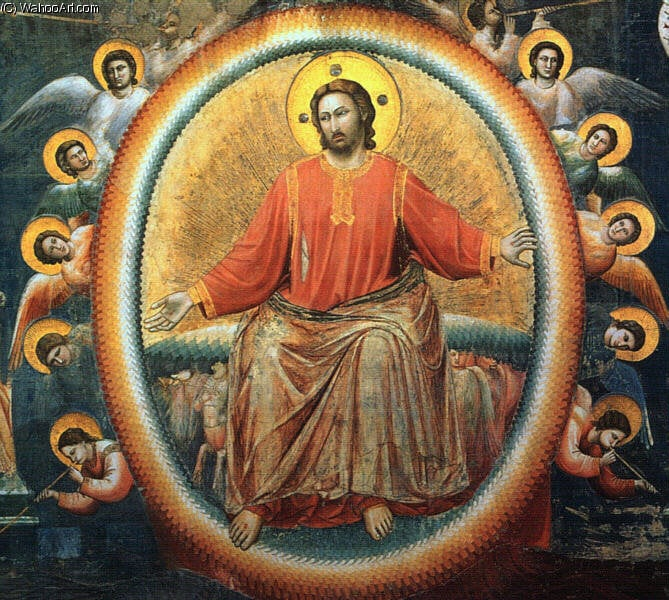
The Last Judgement, detail of Jesus, 1305-13, Fresco,
The Entire Faith Stands or Falls on This One Truth
If Christ is not God:
• Incarnation is a myth.
• Salvation is a myth.
• Every sacrament is empty of grace, and only a myth.
• The Church has no authority, and Scripture is nothing but a beautiful MYTH.
This is why the Church Fathers fought Arianism so adamantly. Because the denial of Christ’s divinity is not a small error; it is the total annihilation of Christianity.
Either Christ is God, or Christianity is false.
There is no middle ground.
Which is why the Nicene Creed does not hedge its words:
“True God from True God, begotten not made, consubstantial with the Father.”
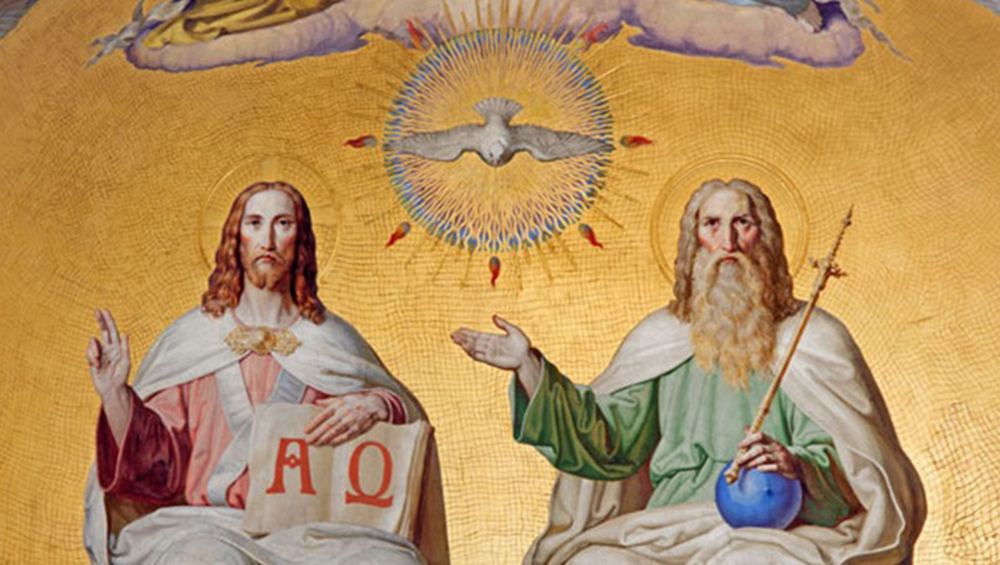
The Holy Trinity – 1460 Laurent Girardin
This is not poetry, but a line drawn in the bedrock of the Church. Cross it; and you have stepped out of the Christian faith and into heresy.
St. Athanasius— the hammer of the Arians: “If the Son is a creature, then we are worshiping a creature. But if we worship a creature, we are no longer Christians.”
“He became what we are that He might make us what He is.” (i.e., divinization is impossible unless He is God.)
A Christianity where Christ is not God is no Christianity at all. It is a hollow shell with the name “Jesus” — who is an IMPOSTER and not the True Jesus – pasted on it.
This is why the Church draws the line here—hard and clear.
Either:
Christ is the Eternal Son, one in being with the Father, or you are outside the Christian faith.Not because of arrogance; but because Truth has boundaries that cannot be crossed. And this boundary is the cornerstone of the whole structure of Christianity.
Arianism is NOT Christianity.
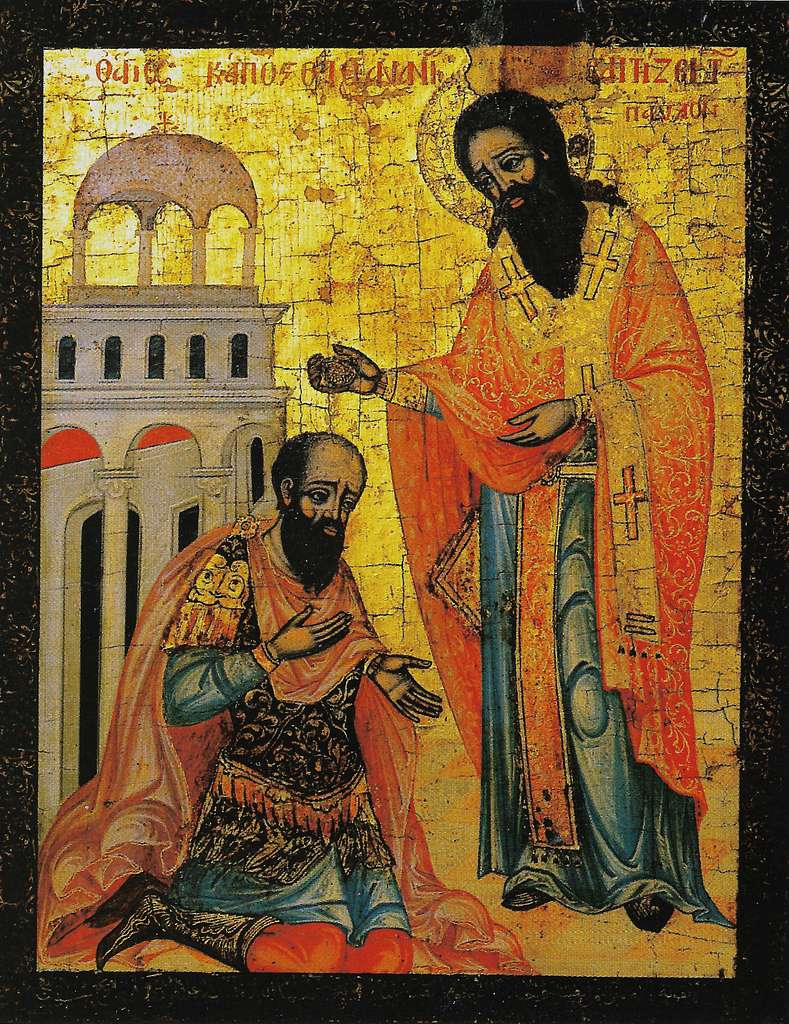
Saint Nicholas Slapping Arius –– Public Domain
St. Augustine: “If Christ were not God, He could not be the Mediator of God and men.”
And so the question is not merely doctrinal — it is personal. If Christ is God, then He is not merely a teacher to admire, but a Lord to worship. He is the One before whom every knee shall bow. He is the Lamb upon the Throne. He is the Alpha and the Omega.
We either receive Him as True God, or we create a false christ in our own image.
There is no middle Christ. There is no halfway divinity. There is only the Eternal Son — or an idol.
Therefore:
Let us confess Him boldly. Worship Him rightly. And never be ashamed of the creed that proclaims Him.
“My Lord and my God.” (John 20:28)
In the name of the Father, and of the Son, and of the Holy Spirit. Amen.
— Grace
Christ’s Appearance to Mary Magdalene after the Resurrection by Alexander Ivanov
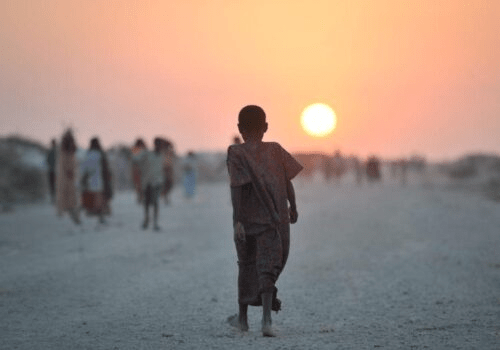
As churches burn across Sudan, believers cling to the only liberty no tyrant can steal: FAITH
“If one member suffers, all suffer together.”— 1 Corinthians 12:26
True love is never safe. It is sacrificial.
It bleeds, forgives, and endures for the sake of another. The persecuted Christians of Sudan are living proof of this — men, women, and children who cling to Christ even when the cost is everything.
As St. Maximilian Kolbe once said:
“Love lives by sacrifice, and the more a soul loves, the more it will sacrifice.”
The world calls it tragedy, but Christianity calls it love perfected; the kind of love that turns suffering into an offering, and persecution into prayer.
Self-giving love.
“You cannot love the truth and not suffer for it.” St. Catherine of Siena
The Crisis
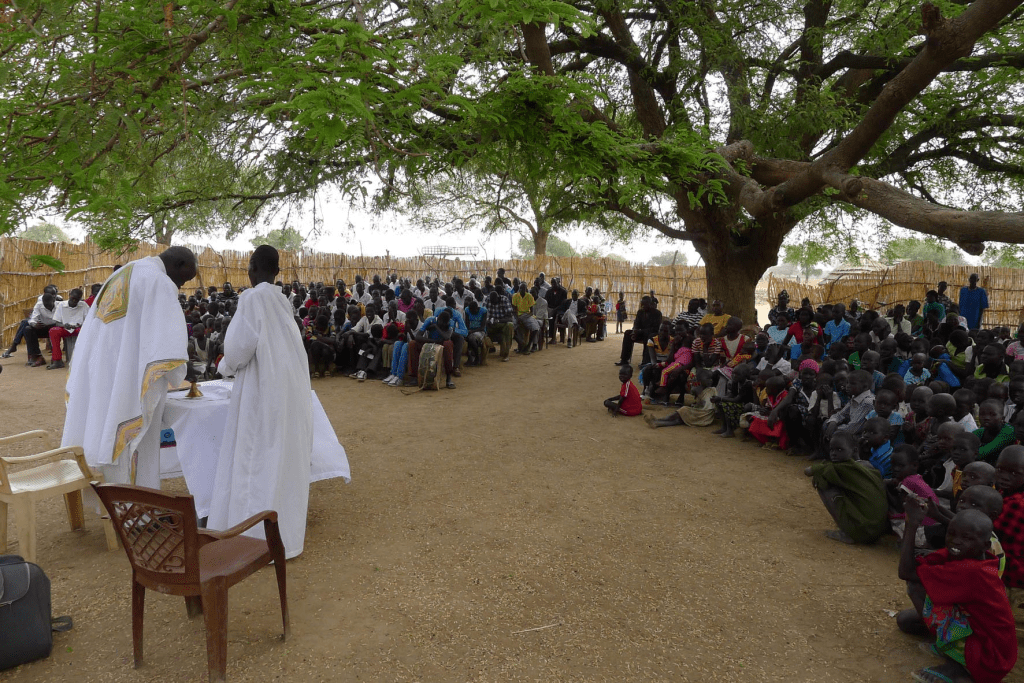
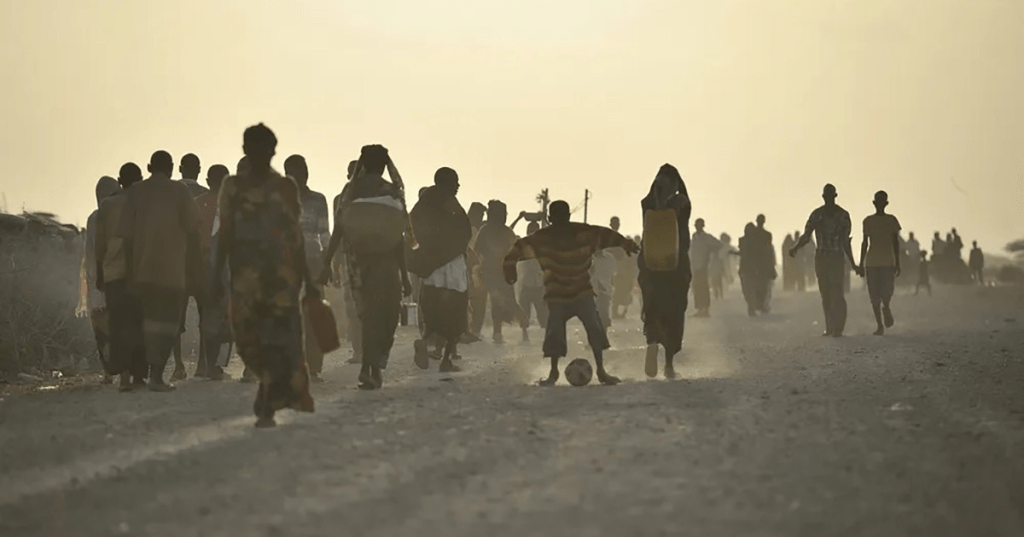
Across Sudan, Christian families are enduring a storm of horrific persecution and grief.
Churches bombed. Pastors tortured. Families fleeing through burned villages with nothing but the cross around their necks.
The war between the Sudanese Armed Forces and the Rapid Support Forces has become a shadow war against the Church itself; a campaign of destruction driven by militant ideology and decades of totalitarian Sharia rule.
In June 2025, three churches in North Darfur were bombed, killing the faithful at prayer.
Over a hundred Christian sites have been seized and desecrated.
Christians are arrested, beaten, and forced into hiding.
Some now meet in secret, worshipping beneath the sound of shellfire.
This is not just politics. It is a war on the human soul; on the freedom to believe, to love, and to live in peace as children of God.
⸻
What We Must Remember
A society that removes individual choice cannot sustain freedom.
And when belief is punished, all human action becomes enslaved.
Sudan shows what happens when a nation replaces the religious freedom with totalitarianism and government coercion: freedom dies, dignity collapses, and poverty spreads like plague.
We who live in relative peace must not look away.
Their suffering is a warning….and a call to crush totalitarian systems before they have time to flourish.
⸻
A Call to Prayer
Pray for the men trying to protect their families, widows and orphans, for pastors in hiding, for the traumatized children of war who have seen their churches and families reduced to ash.
Pray for courage among those who still choose Jesus even when it costs them everything. Sacrificial love is the greatest love there is!
Pray for conversion of hearts among those who persecute them.
And pray that freedom — both of faith and of conscience — may rise again in Sudan.
“The blood of the martyrs is the seed of the Church.”
May that seed, watered by tears and faith, bloom again on Sudanese soil.
O God of all power and mercy, who gave Your Son to bear the Cross for the salvation of the world, look with compassion upon Your servants who suffer for your name’s sake.
Strengthen their faith, increase their hope, even as they are martyred, and grant that their patient endurance may lead many souls to conversion. Protect them by Your grace and bring them to the joy of eternal peace.
Through our Lord Jesus Christ, Your Son, who lives and reigns with You in the unity of the Holy Spirit, God, forever and ever. Amen.
One of the most beautiful things about being Catholic is seeing how the Old Covenant is not discarded, but fulfilled in the New Covenant, in Christ. I love how the Old Testament is full of shadows, symbols, and prophecies that find their completion in the New Covenant. Yom Kippur, “the Day of Atonement”-is one of the most striking examples.
Below is a simple explanation of the Jewish meaning of Yom Kippur and how Catholics understand its fulfillment in Jesus Christ.
The Meaning of Yom Kippur (Jewish Understanding)
Yom Kippur is the holiest day in the Jewish calendar. It falls shortly after Rosh Hashanah and is dedicated entirely to repentance, reconciliation, and atonement. Traditionally, it includes:
A 25-hour total fast (no food or water)
Abstaining from work
Public confession of sin
All-day prayer and synagogue services
Seeking forgiveness from both God and others
In ancient Israel, Yom Kippur was the one day when the High Priest would enter the Holy of Holies to make atonement on behalf of the people (Leviticus 16).
Two goats were offered:
One was sacrificed, its blood sprinkled inside the sanctuary.
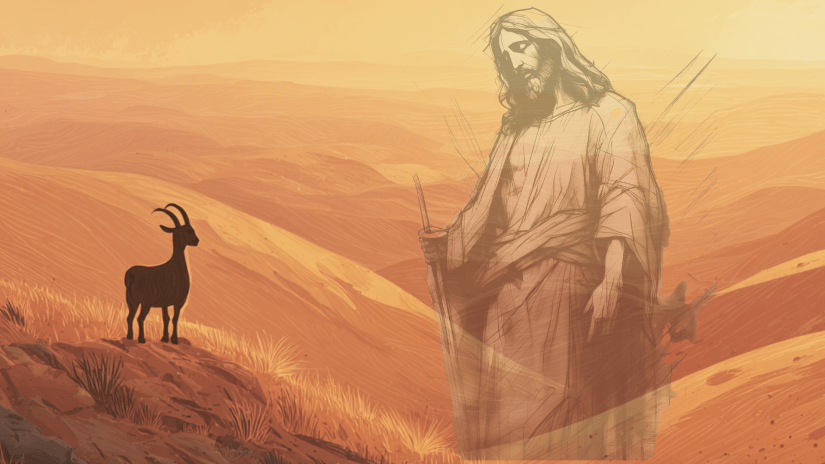
The other… the “scapegoat” … had the sins of the people symbolically laid on it and was sent into the wilderness to die.
A bull was also sacrificed for the priest’s own sins. The ritual restored the people to covenantal purity before God.
How Catholics See Yom Kippur Fulfilled in Christ
The Church doesn’t abolish the meaning of Yom Kippur, but recognizes that its deepest purpose was completed by Jesus.
Christ is the True High Priest
“We have a great high priest, Jesus the Son of God… He entered once for all into the Holy Place.” — Hebrews 4:14, 9:12
Just as the High Priest entered the Holy of Holies once a year, Jesus entered the true heavenly sanctuary – not with animal blood, but His own.
Christ is the Sacrifice
“He has appeared once for all at the end of the ages to put away sin by the sacrifice of himself.” — Hebrews 9:26
The goats and bulls were temporary symbols. Christ is the eternal offering, “He who takes away the sins of the world.”
Christ as the Lamb of God , the New “Scapegoat”
“The Lord has laid on Him the iniquity of us all.” — Isaiah 53:6
Jesus is the one who carries our sins away…outside the city, onto the Cross, and into the tomb, as the Lamb of God.
The Day of Atonement Becomes Good Friday
Yom Kippur was a yearly event. Christ’s sacrifice is “once for all.” Catholics live the fulfillment of that atonement in:
The Mass – the one sacrifice made present
Confession – the personal application of Christ’s atonement
Good Friday – the true Day of Atonement for the world
As St. Augustine famously said:
“The New Testament lies hidden in the Old, and the Old is unveiled in the New.”
And St. Thomas Aquinas reminds us:
“All things in the Old Law were figures of Christ.”
This is why the Catholic Church doesn’t reenact Yom Kippur as a ritual – its meaning has already reached its fulfillment in the Passion of Christ.
Side-by-Side: Yom Kippur and Its Fulfillment in Christ
Old Covenant (Yom Kippur)
New Covenant (Christ)
High Priest enters the Holy of Holies once a year
Christ enters the heavenly sanctuary once for all (Hebrews 9:12)
Goat sacrificed for sins of the people
Christ becomes the perfect sacrificial Lamb (John 1:29)
Scapegoat carries sins into the wilderness
Christ bears our sins and is crucified outside the city (Isaiah 53:6, Hebrews 13:12)
Animal blood sprinkled on the mercy seat
Christ offers His own blood (Hebrews 9:14)
Yearly ritual of atonement
One eternal sacrifice (Hebrews 10:10)
Confession and fasting
Confession and penance in the Sacrament of Reconciliation
Temple sanctuary
Heavenly sanctuary and the Church as His Body
Covenant renewed temporarily
Covenant fulfilled eternally
What This Means for Catholics
We don’t look at Yom Kippur as something foreign to our faith; it’s part of our roots in salvation history. It prepares the world for Christ.
Good Friday becomes the true Day of Atonement.
The Mass is the living memorial of the one sacrifice.
Confession is our personal participation in the atonement He won.
Fasting and penance continue the spirit of repentance the day was meant to inspire.
As Pope Benedict XVI put it:
“Jesus does not abolish the Old Testament; He brings it to fulfillment by giving it its definitive interpretation.”
And the Catechism confirms it:
“The sacrifice of Christ and the sacrifice of the Eucharist are one single sacrifice.” — CCC 1367
Conclusion
Yom Kippur shows us the yearning of Israel for a true and lasting atonement. In the New Covenant, that longing is not rejected – it’s completed.
I love seeing how the Old Testament foreshadows Christ, and how the New Covenant fulfills what the Old began. The shadows have become substance. What was done once a year in symbol is done once for all in truth.
Christ is our High Priest, our Sacrifice, the Lamb of God who takes away the sins of the world. And He didn’t just enter the sanctuary of stone – He opened Heaven.
In the Gospel of John (1:29), John the Baptist exclaims, “Behold, the Lamb of God, who takes away the sin of the world,” referring to Jesus Christ. This phrase identifies Jesus as the perfect, sacrificial Lamb, an echo of the temple sacrifices, signifying that his death on the cross provides atonement for humanity’s sins and offers salvation.





 gracearmstrong.art